Holstein Friesian Cow Guide: Everything Farmers Must Know in 2025

Holstein Friesian Cow Guide: Everything Farmers Must Know in 2025

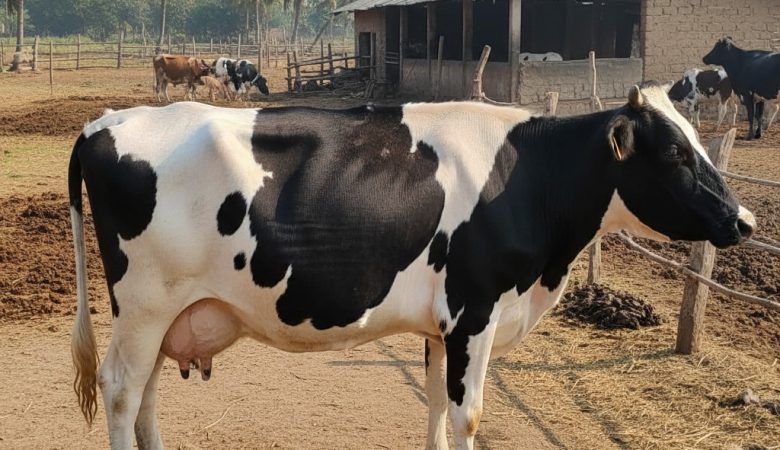
Holstein Friesian Cow Holstein Friesian Other Names Holstein cattle, Friesian cattle, High-Milk Yield Cow Origin Country Germany, Netherlands Use Dairy Cow Weight 550kg–770 kg(approx. 1212–1698 lbs) Height 145 to 165 cm (approximately 57 to 65 inches). Color Black and White (most common) Red and White (rare variety) HF Calf Weight & Height At birth Weight: 35–45 kg (≈ 77–99 lbs) ,At birth Height: 75–85 cm (30–33 inches) Average lifespan 12 to 15 years Milk Yield 8,000–12,000 liters Fat percentage 3.2% – 4.0% SNF (Solids-Not-Fat) 8.2% – 8.8% First Calving of HF Cow Around 24–30 months (2–2.5 years). Gestation Period of HF Cow 9 months and 10 days Holstein Friesian (HF Cow) The Holstein Friesian, commonly known as the HF cow, is one of the world’s most popular dairy breeds. It is widely preferred for its exceptional milk-producing ability, strong physical build, and high adaptability to different climates. HF cows are a leading choice for commercial dairy farms because they deliver maximum output with proper management, making them a profitable asset for small and large farmers alike. Holstein Origin The Holstein Friesian breed originated in the provinces of North Holland and Friesland in the Netherlands. These regions had rich grasslands that helped develop a cow known for producing large volumes of milk. Over the years, the breed spread to Europe, America, and Asia, becoming the backbone of modern dairy farming. Today, HF cows are found in almost every dairy-producing country, including India. Physical Appearance of HF Cow You can identify an HF cow through the following features: Distinct black-and-white or red-and-white patches Large body frame with a deep, wide chest Long, wedge-shaped body Thin neck and well-shaped udder Prominent milk veins running along the belly Usually taller and heavier than Indian indigenous breeds These physical traits make HF cows easy to distinguish even from a distance. Ways to Boost Milk Yield in HF Cows Milk yield can be significantly improved through the following practices: Balanced feed: Provide a mix of green fodder, dry fodder, and concentrate feed. High-quality minerals: Calcium, phosphorus, bypass fat, and mineral mixture improve milk volume and fat levels. Clean environment: Stress-free, hygienic surroundings help maintain health and productivity. Proper watering: HF cows need 60–100 liters of clean water per day. Regular health checkups: Deworming and vaccination maintain immunity and prevent disease-related milk loss. Record keeping: Tracking lactation, feed intake, and heat cycle helps in timely breeding and managing milk yield. Holstein Friesian characteristics High milk-producing ability Calm nature and easy to manage Large udder with strong milk veins Fast growth rate and early maturity Highly adaptable to different climates with proper housing Good feed conversion efficiency Mostly used for commercial dairy farming due to high economic returns Characteristics of HF Cow Milk High water content and easy to digest Fat percentage typically ranges between 3.2% to 4% Ideal for producing milk products like butter, cheese, and paneer Has a clean, mild flavor Contains essential nutrients such as calcium, protein, and vitamin B12
HF Cow (Holstein Friesian) – Milk Yield, Price in India & Farming Guide

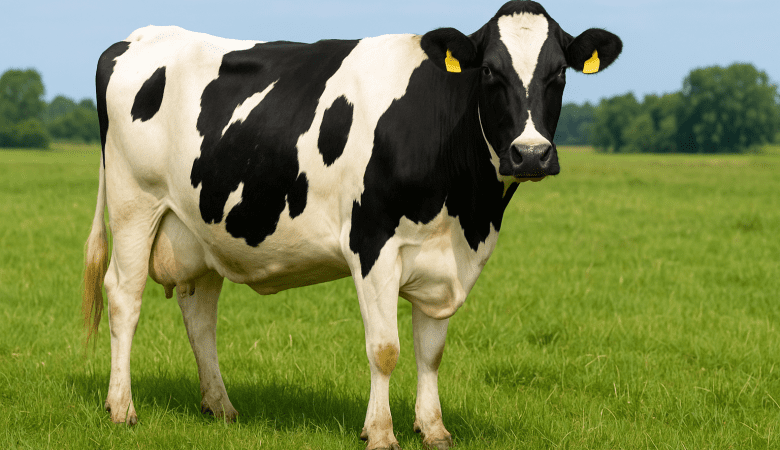
HF Cow (Holstein Friesian) Introduction Dairy farming has always been the backbone of rural India, and farmers are constantly searching for high-yielding, profitable dairy animals. Among the many cattle breeds available, the HF cow (Holstein Friesian cow) is one of the most popular choices for commercial dairy farming. Known for its exceptional milk production, adaptability, and strong physique, the HF cow has become a reliable source of income for thousands of farmers. Origin and History of HF Cow The HF cow, also known as Holstein Friesian, originated in the northern provinces of the Netherlands (Holland) and Northern Germany (Friesland region) over 2,000 years ago. The name comes from these regions: Holstein (from the Holstein area of Germany) Friesian (from Friesland in the Netherlands) Selective breeding in this region created cows that were excellent milk producers. Over time, the HF cow spread worldwide and became the most popular dairy cow breed globally, especially in countries like the USA, Canada, New Zealand, and India. Physical Characteristics of HF Cow HF cows are easily recognizable because of their distinct black-and-white markings. Some may have red-and-white patterns too. Here are some key features: Color: Black and white patches (or red and white in rare cases) Size: Large-framed breed Height: Adult cows stand around 1.4 to 1.5 meters tall Weight: 580–750 kg for adult cows; bulls weigh even more Body Structure: Strong legs, deep barrel, and well-developed udder for heavy milk production Temperament: Generally calm and manageable but require good care Because of their size and milk capacity, HF cows are often called the “dairy machines” of the cattle world. Milk Production Capacity of HF Cow One of the main reasons farmers prefer HF cows is their high milk yield. On average, an HF cow produces 25 to 40 liters of milk per day, depending on feed quality, management, and climate. Under ideal conditions (scientific feeding + proper housing), some cows can even produce up to 50 liters per day. Lactation period: Around 305 days per year. Fat content: 3.2–4% (lower than Indian indigenous breeds but acceptable for commercial milk). 👉 For comparison, most Indian desi cows produce 8–12 liters per day, so HF cows are almost 3–4 times more productive. Feeding and Management Practices To get maximum output from HF cows, farmers need to focus on scientific feeding and management. 1. Feeding Requirements Green Fodder: Napier grass, maize, cowpea, alfalfa, or hybrid varieties. Dry Fodder: Wheat straw, rice straw, etc. Concentrates: Must include grains, oil cakes, mineral mixtures, and vitamins. Water: 40–60 liters of clean water daily per cow. 2. Housing Management Proper ventilation and space are essential. Flooring should be non-slippery and easy to clean. Shade and cooling systems are needed in hot climates because HF cows are sensitive to heat. 3. Health Care Regular vaccination against FMD, HS, and BQ. Deworming every 3–6 months. Routine checkups to prevent mastitis and other udder-related diseases. Advantages of Rearing HF Cow High milk yield (25–40 liters/day). Faster growth rate compared to many indigenous breeds. Easily available in India through dairy farms and government schemes. Adaptability: With proper management, they adapt well to Indian climates. Good income source for commercial dairy farming. Challenges in HF Cow Farming While HF cows are profitable, farmers must be aware of certain challenges: Heat sensitivity: They perform best in cooler climates; in hot areas, productivity reduces without proper cooling. Feed cost: Since they are high-yielding, they need high-quality feed and fodder, which increases expenses. Health issues: Prone to mastitis, reproductive disorders, and metabolic diseases. Fat percentage in milk: Lower than Indian breeds, which may affect ghee/butter production. 👉 Solution: Proper care, balanced feeding, and veterinary support can minimize these issues. HF Cow Price in India The price of HF cows in India varies depending on age, milk yield capacity, and location. Calves (6–12 months): ₹25,000 – ₹40,000 Milking HF cow (producing 20–25 liters/day): ₹60,000 – ₹90,000 High-yield HF cow (producing 30+ liters/day): ₹1,00,000 – ₹1,50,000 Prices may change based on demand, transportation cost, and quality of the cow. Farmers should always buy HF cows from trusted dairy farms or government-certified suppliers to ensure quality. Best Practices for Farmers Provide balanced feed (fodder + concentrate + supplements). Maintain clean housing conditions. Ensure adequate water supply. Use cooling systems (fans, sprinklers) in summer. Schedule regular veterinary check-ups. Practice record keeping for milk yield, health, and breeding cycles. How to Identify a Holstein Friesian Cow Frequently Asked Questions (FAQs) 1. How much milk does an HF cow give per day? On average, an HF cow gives 25–40 liters per day. With excellent feeding and management, production can reach 50 liters/day. 2. What is the price of HF cow in India? The price ranges between ₹60,000 to ₹1.5 lakh, depending on age, health, and milk yield. 3. What is the full form of HF cow? HF stands for Holstein Friesian, a breed that originated in the Netherlands and Germany. 4. Is HF cow suitable for Indian climate? Yes, but they are sensitive to heat. In hot regions, farmers must provide proper shade, fans, and water cooling to maintain productivity. 5. What is the fat percentage in HF cow milk? The fat content is 3.2–4%, which is lower than Indian desi breeds but ideal for liquid milk consumption and commercial dairy businesses. 6. How many calves can an HF cow produce in its lifetime? On average, an HF cow can produce 6–8 calves in its lifetime, depending on breeding and management. On average, an HF cow gives 25–40 liters per day. With excellent feeding and management, production can reach 50 liters/day. The price ranges between ₹60,000 to ₹1.5 lakh, depending on age, health, and milk yield. HF stands for Holstein Friesian, a breed that originated in the Netherlands and Germany. Yes, but they are sensitive to heat. In hot regions, farmers must provide proper shade, fans, and water cooling to maintain productivity. The fat content is 3.2–4%, which is lower than Indian desi breeds but ideal for liquid milk consumption and commercial dairy businesses.

Friendly-support-icon
0 Lakh+

App Downloads 

happy-clients-icon
0 +

Advisor’s Team 

Features Img
0 Cr+

Social Media Reach

quality
0 %

Happy Customers

NEWS LETTER

Subscribe To Our Newsletter

Welcome to TabelaWala, brand name of White Gold Livestock Private Limited, the ultimate marketplace for dairy farmers looking to buy or sell cows and buffaloes online as well as offline.

+91 830 570 6703

Got Questions? Call us 24/7

Working Hours

Monday – Saturday

10:00 pm – 05:45 pm

Contact Us

Address:

Machalpur Khurd, Tehsil Barwaha, District Khargone, M.P. India 451225

Email:

contact@tabelawala.com info@tabelawala.in

TabelaWala
Privacy Overview

This website uses cookies so that we can provide you with the best user experience possible. Cookie information is stored in your browser and performs functions such as recognising you when you return to our website and helping our team to understand which sections of the website you find most interesting and useful.