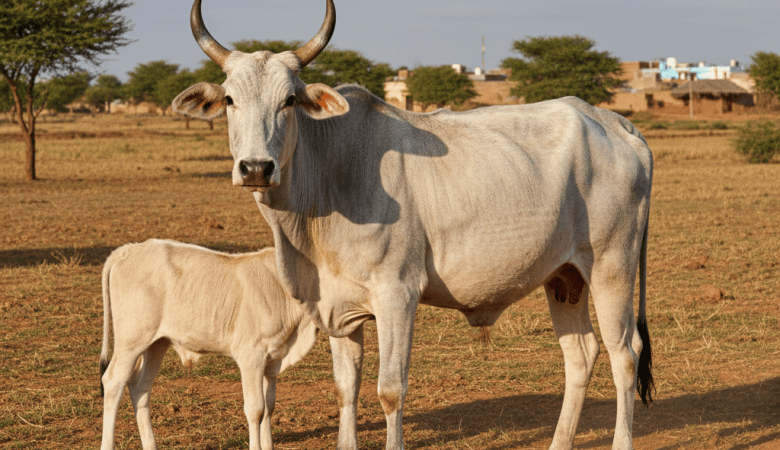
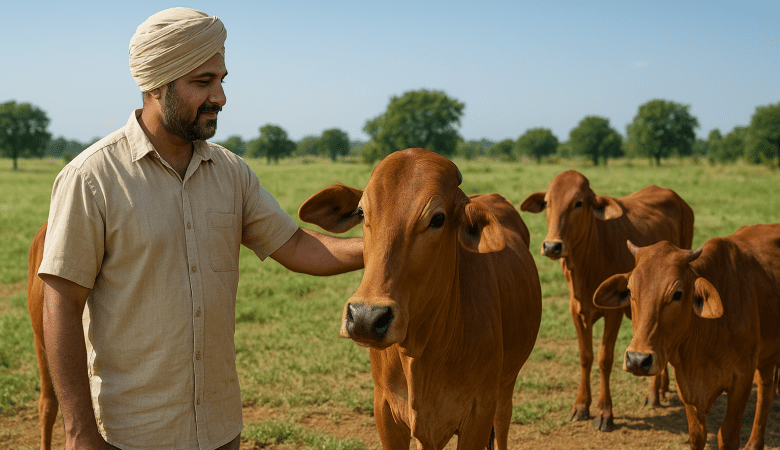
Tharparkar Cow The Tharparkar cow, also known as White Sindhi or Grey Sindhi, is one of India’s most valued indigenous cattle breeds. Originating from the Thar Desert region of Rajasthan and parts of Sindh (now in Pakistan), this hardy breed has earned a reputation for its adaptability to extreme climatic conditions and superior milk production. For dairy farmers aiming for low-maintenance, high-quality milk yield, Tharparkar cattle are an excellent choice. Origin and Distribution Native Region: Thar Desert (Rajasthan) and Sindh. Current Presence: Widely reared across Rajasthan, Gujarat, Haryana, and Uttar Pradesh. Adaptability: Thrives in arid and semi-arid conditions, making it perfect for drought-prone areas. Physical Characteristics Color: Grey to white with darker shading on the shoulders and neck. Body Build: Medium to large frame with strong limbs. Head: Broad forehead and slightly upward-pointing horns. Skin & Coat: Smooth skin that resists external parasites. Milk Production Capacity Average Milk Yield: 8–12 liters per day under proper management. Milk Quality: Rich in A2 protein, making it healthier and easier to digest. Lactation Period: Around 250–300 days. Butterfat Content: Approximately 4–5%, ideal for making ghee and other dairy products. Unique Benefits for Dairy Farming Drought Resistance – Survives and produces milk even in harsh, dry conditions. Disease Resistance – Naturally resistant to common tropical cattle diseases. Dual-Purpose Utility – Suitable for both milk production and draught work. Cost-Effective – Low maintenance and feed requirements reduce operational costs. Sustainable Choice – Supports organic and small-scale dairy farming practices. Feeding and Management Tips Provide dry fodder like bajra or jowar straw supplemented with green fodder when available. Ensure adequate water during hot summers. Maintain clean housing and regular vaccination schedules. For better milk yield, include mineral mixtures and balanced concentrates. Breeding Practices Tharparkar cows are excellent for cross-breeding with exotic breeds like Holstein Friesian to improve milk yield while retaining drought tolerance. Ideal calving interval: 14–16 months. Economic Importance Farmers in India increasingly prefer Tharparkar cows because: Their A2 milk fetches a premium price in health-conscious markets. Reduced veterinary costs due to their natural immunity. High demand for organic milk production and sustainable agriculture. Lorem ipsum dolor sit amet, consectetur adipiscing elit. Ut elit tellus, luctus nec ullamcorper mattis, pulvinar dapibus leo. 👉 Apply for a Cattle Loan. TabelaWala – White Gold Livestock Pvt. Ltd. — Empowering farmers, Please enable JavaScript in your browser to complete this form.Please enable JavaScript in your browser to complete this form. Name * FirstLast Mobile Number *Enter Your Number Submit
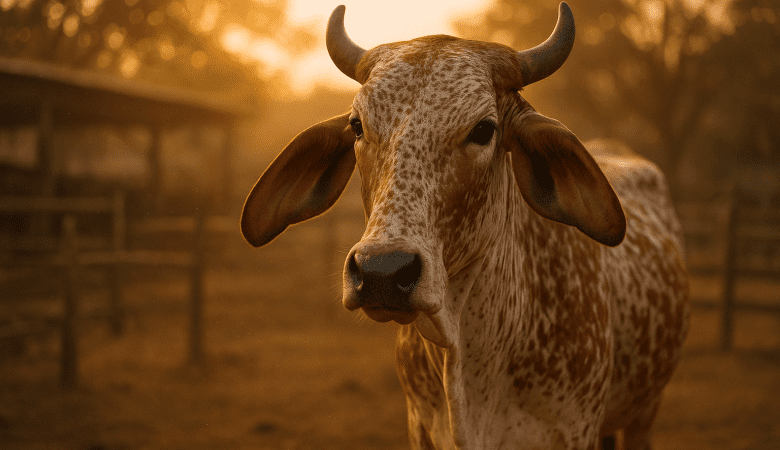
Introduction to Gir Cow Gir Cow is one of the most famous indigenous cattle breeds of India, mainly found in Gujarat. Known for its high milk production, disease resistance, and adaptability, Gir Cow has become popular not only in India but also in countries like Brazil, USA, and Mexico. This breed is also called “Kathiawari Cow” or “Surti Cow” in some regions. Gir Cow is considered holy in Indian culture and is highly valued by dairy farmers for its economic benefits. Origin and History of Gir Cow Native to Gir forests of Kathiawar, Gujarat. Historically, Gir cattle were used by local farmers for both milk and draught purposes. Exported to Brazil and other countries where cross-breeding has increased milk productivity. Physical Characteristics of Gir Cow Gir Cows have unique physical features which make them easy to identify: Body Colour: White with red/brown spots (sometimes pure red). Head: Long and narrow with a domed forehead. Horns: Curved and bent backward. Ears: Long, pendulous, and leaf-shaped. Udder: Well-developed, ideal for high milk production. Size: Medium to large, strong build. Milk Production of Gir Cow One of the main reasons Gir Cow is popular is its high milk yield. Average Milk Yield: 10–15 litres per day (some high-yield cows produce up to 25 litres). Milk Quality: Rich in A2 protein (easy to digest, healthier than A1 milk). Contains high fat (4–5%) and SNF (Solids Not Fat). Considered beneficial for immunity and digestion. Advantages of Gir Cow Farming Gir Cow is highly profitable for dairy farmers. Here are the key benefits: High Milk Yield: Produces more milk compared to other indigenous breeds. A2 Milk Benefits: Better for human health, reduces risk of diseases. Disease Resistance: Strong immunity, less affected by tropical diseases. Low Maintenance Cost: Can survive on simple fodder and dry grass. Long Lifespan: Remains productive for many years. Cultural Value: Respected in Indian traditions and rituals. Price of Gir Cow in India The price depends on age, health, and milk yield capacity. Average Price: ₹60,000 to ₹1,50,000 High-yield Gir Cow: ₹2 lakh or more Challenges in Gir Cow Farming While Gir Cow is profitable, farmers must also manage: Proper feeding & nutrition for maximum milk output. Veterinary care for preventing diseases. Maintaining clean and comfortable housing. Gir Cow in International Market Brazil has the largest population of Gir cows outside India. Used in cross-breeding to improve milk yield. Popular for A2 milk export business. Frequently Asked Questions What is special about Gir Cow? Gir Cow is an indigenous Indian cattle breed known for high milk production, A2 protein-rich milk, disease resistance, and adaptability to different climates. How much milk does a Gir Cow produce per day? On average, a Gir Cow produces 10–15 litres per day, but high-yield cows can give up to 25 litres per day. Why is Gir Cow milk considered healthy? Gir Cow milk contains A2 beta-casein protein, which is easier to digest, boosts immunity, and reduces risks of heart problems, diabetes, and digestive disorders. What is the price of Gir Cow in India? The price of Gir Cow in India ranges from ₹60,000 to ₹1,50,000, while high-yield cows can cost above ₹2,00,000 depending on age, health, and milk capacity. In which state is Gir Cow mainly found? Gir Cow is originally from the Gir forest region of Gujarat, but today it is also found in Maharashtra, Rajasthan, and many other Indian states. Can Gir Cow survive in hot climates? Gir Cow is well adapted to hot and humid climates. Its natural resistance makes it suitable for tropical countries like India and Brazil. How long does a Gir Cow remain productive? Gir Cow has a long productive lifespan, giving good quality milk for 12–15 years with proper care. Which countries export or rear Gir Cow apart from India? Countries like Brazil, USA, and Mexico have a large population of Gir Cows, often used for cross-breeding to increase milk yield. What is the fat percentage in Gir Cow milk? Gir Cow milk usually contains 4–5% fat, making it creamier and more nutritious compared to many exotic breeds. Is Gir Cow farming profitable in India? Yes ✅, Gir Cow farming is profitable due to high milk yield, demand for A2 milk, low maintenance cost, and cultural significance in India. Gir Cow is an indigenous Indian cattle breed known for high milk production, A2 protein-rich milk, disease resistance, and adaptability to different climates. On average, a Gir Cow produces 10–15 litres per day, but high-yield cows can give up to 25 litres per day. Gir Cow milk contains A2 beta-casein protein, which is easier to digest, boosts immunity, and reduces risks of heart problems, diabetes, and digestive disorders. The price of Gir Cow in India ranges from ₹60,000 to ₹1,50,000, while high-yield cows can cost above ₹2,00,000 depending on age, health, and milk capacity. Gir Cow is originally from the Gir forest region of Gujarat, but today it is also found in Maharashtra, Rajasthan, and many other Indian states. Gir Cow is well adapted to hot and humid climates. Its natural resistance makes it suitable for tropical countries like India and Brazil. Gir Cow has a long productive lifespan, giving good quality milk for 12–15 years with proper care. Countries like Brazil, USA, and Mexico have a large population of Gir Cows, often used for cross-breeding to increase milk yield. Gir Cow milk usually contains 4–5% fat, making it creamier and more nutritious compared to many exotic breeds. Yes ✅, Gir Cow farming is profitable due to high milk yield, demand for A2 milk, low maintenance cost, and cultural significance in India. Tabelawala Farm: Supporting Indian Farmers At Tabelawala, we believe in empowering dairy farmers by: Providing healthy, well-bred cows like Red Sindhi, Gir, Sahiwal, and HF breeds Offering easy farm loan services for buying cattle and starting dairy businesses Guiding farmers with dairy farming techniques and best practices 👉 Apply for a Cattle Loan. TabelaWala – White Gold Livestock Pvt. Ltd. — Empowering farmers, Please enable JavaScript in your browser
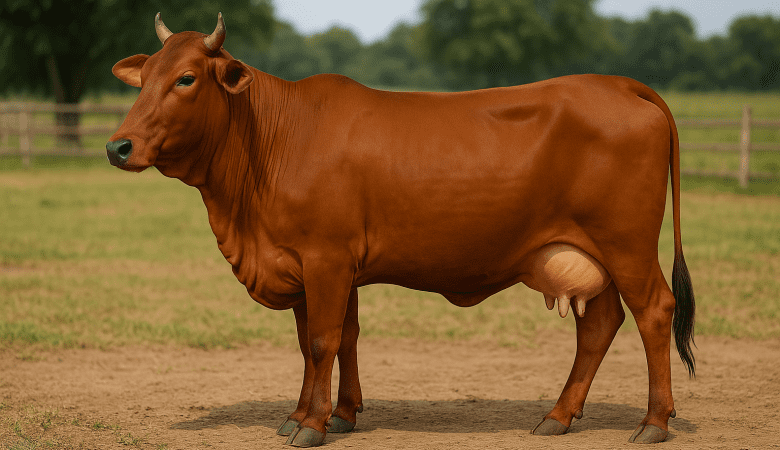
Red Sindhi Cow: A Pride of Indian Dairy Farming India is home to some of the finest dairy cattle breeds in the world, and among them, the Red Sindhi Cow holds a special place. Known for its high milk yield, disease resistance, and adaptability, this breed is a farmer’s trusted companion. At Tabelawala Farm, we not only raise quality dairy cattle like the Red Sindhi cow but also support farmers through affordable cattle loan services, making dairy farming more accessible and profitable. Origin of Red Sindhi Cow The Red Sindhi cow originates from the Sindh region (now in Pakistan) and is widely reared across India due to its ability to adapt to different climatic conditions. Farmers prefer this breed because of its low maintenance needs and high productivity. Key Characteristics of Red Sindhi Cow Colour: Reddish-brown to dark red Size: Medium-sized with strong body structure Horns: Short and curved Milk Yield: 12–15 litres per day on average Fat Content: Around 4–5% (ideal for ghee and dairy products) Nature: Calm and disease-resistant Why Farmers Choose Red Sindhi Cow High-Quality Milk: Rich in fat, perfect for dairy products Heat Tolerance: Performs well even in hot Indian climates Disease Resistance: Requires less medical care Better Lifespan: Productive for many years Red Sindhi Cow vs Other Indian Breeds Compared to breeds like Gir and Sahiwal, the Red Sindhi cow is smaller but still provides a steady supply of nutritious milk, making it highly suitable for small and medium-scale farmers. Tabelawala Farm: Supporting Indian Farmers At Tabelawala, we believe in empowering dairy farmers by: Providing healthy, well-bred cows like Red Sindhi, Gir, Sahiwal, and HF breeds Offering easy farm loan services for buying cattle and starting dairy businesses Guiding farmers with dairy farming techniques and best practices FAQs About Red Sindhi Cow What is the average milk production of Red Sindhi cow? On average, a Red Sindhi cow produces 12–15 litres of milk per day with 4–5% fat. Is Red Sindhi cow suitable for small farmers? Yes, due to its low maintenance and high disease resistance, it is perfect for small-scale dairy farming. How can I buy a Red Sindhi cow from Tabelawala? You can directly contact us at Tabelawala Farm. We also provide loan facilities to make cattle purchase easy for farmers. On average, a Red Sindhi cow produces 12–15 litres of milk per day with 4–5% fat. Yes, due to its low maintenance and high disease resistance, it is perfect for small-scale dairy farming. You can directly contact us at Tabelawala Farm. We also provide loan facilities to make cattle purchase easy for farmers. 👉 Apply for a Cattle Loan. TabelaWala – White Gold Livestock Pvt. Ltd. — Empowering farmers, Please enable JavaScript in your browser to complete this form.Please enable JavaScript in your browser to complete this form. Name * FirstLast Mobile Number *Enter Your Number Submit
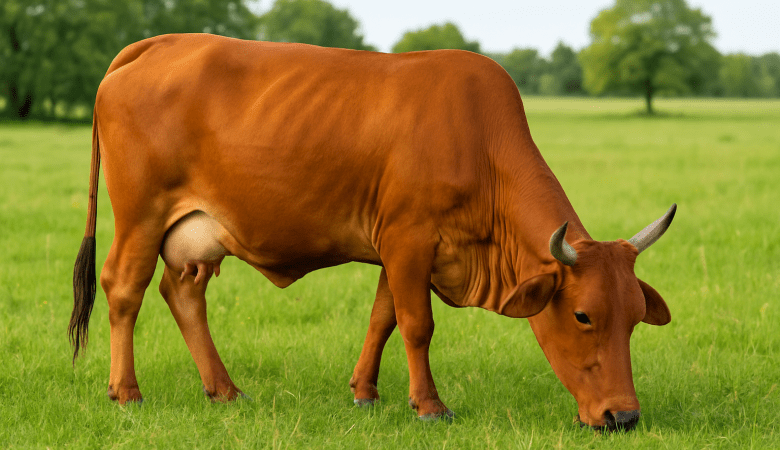
Sahiwal Cow – The Pride of Indian Dairy Farming Sahiwal Cow is one of the best indigenous dairy breeds of India. Known for its high milk yield, disease resistance, and adaptability, this breed has become the first choice for farmers who want to succeed in dairy farming. At Tabelawala Farm, we understand the value of pure breeds like Sahiwal, and we also support farmers by providing loan services to grow their dairy business. Origin of Sahiwal Cow The Sahiwal breed originated from the Sahiwal district in Punjab (Pakistan) and is now popular all across India. It is considered the best Zebu dairy breed in India and is often used for crossbreeding to improve milk productivity. Physical Characteristics Body Colour: Reddish brown to pale red with white patches. Hump: Medium-sized, typical of Zebu cattle. Horns: Small and curved. Udder: Well-developed, ideal for milking. Nature: Calm and friendly, easy to handle. Milk Production Sahiwal cows are famous for their rich milk. Average Milk Yield: 8–12 litres per day. Fat Content: Around 4.5%–5%, which makes it highly nutritious. Lactation Period: 280–300 days. This makes the Sahiwal cow not just a farmer’s asset but also a profitable investment in dairy farming. Advantages of Sahiwal Cow High milk production compared to other indigenous breeds. Disease resistance, especially against tropical diseases. Adaptable to hot and humid climate. Long productive life. Best choice for organic and desi milk production. Sahiwal Cow Price in India The price depends on the age, milk capacity, and breed quality. On average: Heifer (young cow): ₹40,000 – ₹70,000 Adult milking cow: ₹70,000 – ₹1,20,000 (At Tabelawala Farm, we guide farmers in purchasing genuine breeds and also provide loan assistance for cattle purchase.) Role of Tabelawala in Dairy Farming At Tabelawala, we not only provide pure breed Sahiwal cows but also: Help farmers in buying and selling cattle. Provide cattle loans to start or expand dairy farming. Offer guidance on dairy farm management. If you are planning to start dairy farming, Tabelawala is your trusted partner. Frequently Asked Questions (FAQs) Is Sahiwal cow better than HF (Holstein Friesian) cow? Yes, Sahiwal produces less milk than HF but has higher fat content and better adaptability to Indian climate. How many litres of milk does a Sahiwal cow give per day? On average, 8–12 litres per day. Where can I buy a pure Sahiwal cow? You can contact Tabelawala Farm, where we provide pure breed cattle along with loan services. Yes, Sahiwal produces less milk than HF but has higher fat content and better adaptability to Indian climate. On average, 8–12 litres per day. You can contact Tabelawala Farm, where we provide pure breed cattle along with loan services. 👉 Apply for a Cattle Loan. TabelaWala – White Gold Livestock Pvt. Ltd. — Empowering farmers, Please enable JavaScript in your browser to complete this form.Please enable JavaScript in your browser to complete this form. Name * FirstLast Mobile Number *Enter Your Number Submit
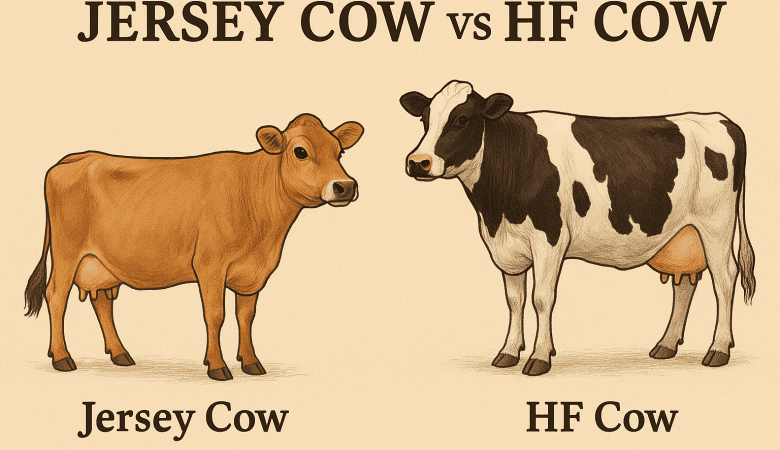
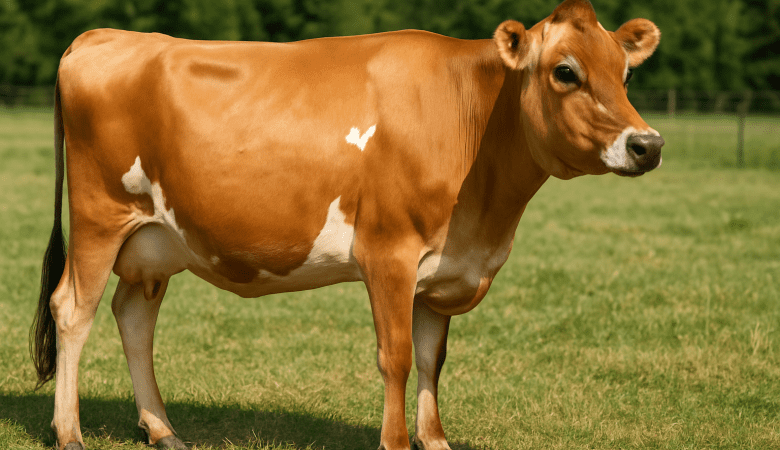
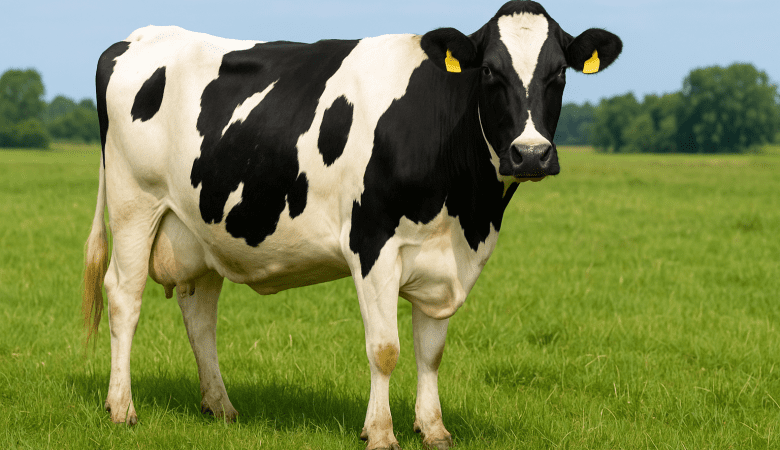
Jersey Cow vs HF Cow: Which is Better for Dairy Farming in India? When it comes to dairy farming in India, two popular cow breeds often come into discussion – the Jersey Cow and the HF Cow (Holstein Friesian). Both have their own strengths and limitations. Choosing the right breed depends on your farming goals, budget, and the local conditions. Let’s understand the differences in detail. Origin and Background Jersey Cow:The Jersey breed originally comes from Jersey Island in the English Channel. They are known for their small size, adaptability, and high-quality milk with rich fat content. HF Cow (Holstein Friesian):The Holstein Friesian breed comes from the Netherlands and Germany. These cows are larger in size and globally famous for their high milk yield. Physical Appearance Jersey Cow: Smaller, light brown in colour, with a white face and big eyes. They look very gentle and attractive. HF Cow: Tall, strong, and large-bodied. They have the typical black and white patches that make them easily recognisable. Milk Yield and Quality Jersey Cow: Average milk yield: 15–20 litres per day Butterfat: 4.5%–5.5% Protein: 3.5%–4% Milk is best suited for ghee, butter, paneer, and cheese. HF Cow: Average milk yield: 25–40 litres per day (sometimes even more under good care) Butterfat: 3%–3.5% Protein: 3%–3.2% Milk is thinner but produced in higher quantity. Adaptability and Climate Jersey Cow: Adapts well to hot and humid climates of India. Requires less feed and is generally hardy. HF Cow: Performs best in moderate or cold climates. In hot regions, proper cooling and care are needed. Feed and Maintenance Jersey Cow: Requires less feed compared to its body weight. Economical for small and medium farmers. HF Cow: Needs more feed and high-quality nutrition to maintain its high milk yield. This increases cost of maintenance. Disease Resistance Jersey Cow: Strong immunity, less prone to diseases, and lower veterinary expenses. HF Cow: Comparatively weaker immunity and more vulnerable to tropical diseases, so regular healthcare is necessary. Price and Availability Jersey Cow: Cheaper than HF cows, price in India usually ranges from ₹50,000–₹80,000 depending on lactation and milk yield. HF Cow: Higher price due to high yield capacity, ranging from ₹70,000–₹1,20,000. Which One Should You Choose? If your goal is high milk volume and you are ready to spend more on feed and management, then HF Cow is a good option. If you prefer low-cost maintenance, good adaptability, and rich milk quality, then Jersey Cow will suit you better. Final Thoughts Both Jersey and HF cows are excellent dairy breeds, but they serve different purposes. For large-scale commercial dairy farms with good infrastructure, HF cows are ideal. For small and medium farmers in India who want quality milk and lower expenses, Jersey cows are more profitable. By understanding their differences, you can make the right choice for your dairy business. 👉 Apply for a Cattle Loan. TabelaWala – White Gold Livestock Pvt. Ltd. — Empowering farmers, Please enable JavaScript in your browser to complete this form.Please enable JavaScript in your browser to complete this form. Name * FirstLast Mobile Number *Enter Your Number Submit
Introduction Jersey cows are among the most popular dairy breeds worldwide, known for their high-quality milk, rich butterfat content, adaptability, and lower maintenance cost. Originating from the Island of Jersey (UK), this breed has spread across Europe, the United States, and Asia, including India, where it has become a preferred choice for many dairy farmers. Characteristics of Jersey Cows Average Lifespan A Jersey cow generally lives 15–20 years if properly cared for. On average, their productive milking life is 7–10 years, which makes them a long-term asset for farmers. Size and Weight Jersey cows are smaller than Holsteins or indigenous Indian breeds. Adult cows: 360–500 kg Adult bulls: 600–700 kgDespite their smaller size, they are highly efficient milk producers. Body Color and Markings Jerseys usually have a light brown, fawn, or reddish coat, sometimes with white patches. Their black nose, large eyes, and small size make them easy to identify. Milk Quality: Butterfat and Protein Levels One of the strongest points of Jersey cows is their milk quality. Butterfat: 4.5–5.5% (much higher than Holsteins at 3.5%) Protein: 3.5–4%This makes Jersey milk excellent for ghee, butter, cheese, and paneer. Milk Yield & Efficiency Average Milk Production Per Lactation On average, a Jersey cow produces 4000–6000 liters per lactation (305 days). While Holsteins produce more in volume, Jerseys produce higher-value milk due to its fat and protein content. Factors Affecting Milk Yield Nutrition: Balanced diet with fodder, silage, and concentrates Age & Stage: Peak production usually occurs in the second and third lactation Health & Genetics: Healthy cows with good breeding lines produce more Climate: Jerseys adapt well to warm climates compared to Holsteins Why Jersey Milk is Preferred Because of its creaminess and high fat content, Jersey milk is best for: Butter and ghee production Paneer and cheese manufacturing Ice cream and flavored milk Feeding & Nutrition Management Recommended Fodder and Feed A Jersey cow needs a balanced ration of: Green fodder: Napier grass, maize, berseem, sorghum Dry fodder: Hay, straw Concentrates: Grains, oilseed cakes, bran Vitamin and Mineral Requirements Supplements are essential for: Calcium & Phosphorus (for bone and milk production) Vitamin A, D, E (for reproduction and immunity) Mineral mixture (for balanced growth and milk yield) Seasonal Feeding Adjustments Summer: More green fodder, water, and mineral salts to prevent heat stress Winter: Energy-rich concentrates to maintain body warmth Care & Health Management Calving Management and Gestation The gestation period of a Jersey cow is about 278–285 days (9 months). Proper care before and after calving ensures a healthy calf and consistent milk production. Common Diseases and Prevention Mastitis – Maintain udder hygiene Milk fever – Provide calcium supplements Foot and mouth disease – Vaccination and biosecurity measures Vaccination Schedule Essential vaccines include: FMD (Foot and Mouth Disease) HS (Hemorrhagic Septicemia) BQ (Black Quarter) Brucellosis Hygiene and Hoof Care Regular hoof trimming to prevent lameness Clean housing reduces bacterial infections Housing & Environment Ideal Shed Design and Ventilation A good shed must provide: Cross-ventilation for fresh air Sloped flooring for easy drainage Adequate space (40–50 sq. ft. per cow) Bedding and Flooring Use dry straw or sand for bedding Floors should be non-slippery and easy to clean Protection from Climate Summer: Fans, sprinklers, and shade trees Winter: Warm bedding and proper enclosure Breeding & Genetics Natural vs Artificial Insemination Natural service is cheaper but riskier for disease spread Artificial insemination (AI) allows better selection of superior genetics Crossbreeding Practices Crossbreeding Jerseys with local breeds improves: Heat tolerance Disease resistance Milk fat percentage Genetic Traits Farmers prefer Jerseys for: High fertility Early maturity Efficient feed conversion Cost & Profitability Cost of Rearing Feed: 60–70% of total cost Housing & healthcare: 20–30% Initial purchase price in India: ₹50,000 – ₹90,000 depending on age and lactation stage Return on Investment A single Jersey cow yields 10–20 liters/day with 4.5–5% fat milk Higher milk fat means better market prices Value-added products (ghee, paneer, butter) increase profit margins Price Comparison with Other Breeds Jersey: Lower cost, high-fat milk Holstein Friesian: High milk yield, lower fat Indigenous breeds (Gir, Sahiwal): Good for organic and A2 milk markets Comparison with Other Dairy Breeds Jersey vs Holstein Friesian Holstein: Higher milk yield (25–35 liters/day) but lower fat (3.5%) Jersey: Lower yield (15–20 liters/day) but higher fat (4.5–5.5%) Jersey vs Indigenous Breeds Jerseys adapt better in hot climates compared to Holsteins Indian breeds (Gir, Sahiwal) produce A2 milk, but Jerseys produce creamier milk Dairy Products from Jersey Milk Butter & Ghee – High butterfat makes them ideal Paneer & Cheese – Better yield and taste Ice Cream – Creamy texture preferred by consumers Adapting Jerseys to Local Conditions Jerseys perform well in Indian rural areas if given proper feed and housing Water availability is crucial for high yield Market demand for high-fat milk ensures consistent income Best Dairy Farm Practices for Jerseys Keep detailed records of milk yield, health, and breeding Use modern equipment like milking machines, milk coolers, and fodder choppers Cow dung can be used for biogas or organic fertilizers History & Origin of Jersey Cattle Jersey cows originated from the Island of Jersey (UK) in the 1700s. Over time, they became popular in the USA, Europe, and Asia due to their hardiness, fertility, and milk quality. Today, they are one of the most profitable dairy breeds globally. FAQs About Jersey Cows How much milk does a Jersey cow give per day? A healthy Jersey cow gives 10–20 liters per day depending on diet and management. What is the fat percentage in Jersey milk? Jersey milk contains 4.5–5.5% fat, making it ideal for ghee and butter. What is the price of a Jersey cow in India? On average, Jersey cows cost ₹50,000 to ₹90,000 depending on lactation stage, health, and location. Are Jersey cows profitable for small farmers? Yes, Jerseys require less feed, produce high-fat milk, and adapt well to Indian climates, making them profitable for small and medium farmers. Which is better: Jersey or Holstein? Jersey: High-fat milk, lower feed cost, better in hot climates
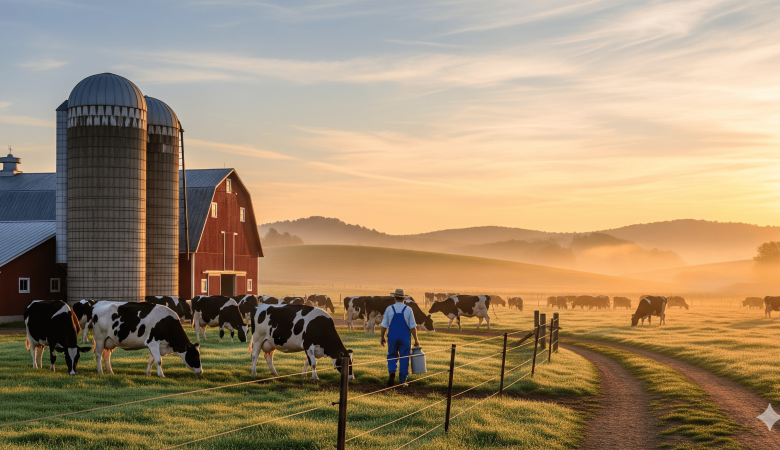
HF Cow (Holstein Friesian) Introduction Dairy farming has always been the backbone of rural India, and farmers are constantly searching for high-yielding, profitable dairy animals. Among the many cattle breeds available, the HF cow (Holstein Friesian cow) is one of the most popular choices for commercial dairy farming. Known for its exceptional milk production, adaptability, and strong physique, the HF cow has become a reliable source of income for thousands of farmers. Origin and History of HF Cow The HF cow, also known as Holstein Friesian, originated in the northern provinces of the Netherlands (Holland) and Northern Germany (Friesland region) over 2,000 years ago. The name comes from these regions: Holstein (from the Holstein area of Germany) Friesian (from Friesland in the Netherlands) Selective breeding in this region created cows that were excellent milk producers. Over time, the HF cow spread worldwide and became the most popular dairy cow breed globally, especially in countries like the USA, Canada, New Zealand, and India. Physical Characteristics of HF Cow HF cows are easily recognizable because of their distinct black-and-white markings. Some may have red-and-white patterns too. Here are some key features: Color: Black and white patches (or red and white in rare cases) Size: Large-framed breed Height: Adult cows stand around 1.4 to 1.5 meters tall Weight: 580–750 kg for adult cows; bulls weigh even more Body Structure: Strong legs, deep barrel, and well-developed udder for heavy milk production Temperament: Generally calm and manageable but require good care Because of their size and milk capacity, HF cows are often called the “dairy machines” of the cattle world. Milk Production Capacity of HF Cow One of the main reasons farmers prefer HF cows is their high milk yield. On average, an HF cow produces 25 to 40 liters of milk per day, depending on feed quality, management, and climate. Under ideal conditions (scientific feeding + proper housing), some cows can even produce up to 50 liters per day. Lactation period: Around 305 days per year. Fat content: 3.2–4% (lower than Indian indigenous breeds but acceptable for commercial milk). 👉 For comparison, most Indian desi cows produce 8–12 liters per day, so HF cows are almost 3–4 times more productive. Feeding and Management Practices To get maximum output from HF cows, farmers need to focus on scientific feeding and management. 1. Feeding Requirements Green Fodder: Napier grass, maize, cowpea, alfalfa, or hybrid varieties. Dry Fodder: Wheat straw, rice straw, etc. Concentrates: Must include grains, oil cakes, mineral mixtures, and vitamins. Water: 40–60 liters of clean water daily per cow. 2. Housing Management Proper ventilation and space are essential. Flooring should be non-slippery and easy to clean. Shade and cooling systems are needed in hot climates because HF cows are sensitive to heat. 3. Health Care Regular vaccination against FMD, HS, and BQ. Deworming every 3–6 months. Routine checkups to prevent mastitis and other udder-related diseases. Advantages of Rearing HF Cow High milk yield (25–40 liters/day). Faster growth rate compared to many indigenous breeds. Easily available in India through dairy farms and government schemes. Adaptability: With proper management, they adapt well to Indian climates. Good income source for commercial dairy farming. Challenges in HF Cow Farming While HF cows are profitable, farmers must be aware of certain challenges: Heat sensitivity: They perform best in cooler climates; in hot areas, productivity reduces without proper cooling. Feed cost: Since they are high-yielding, they need high-quality feed and fodder, which increases expenses. Health issues: Prone to mastitis, reproductive disorders, and metabolic diseases. Fat percentage in milk: Lower than Indian breeds, which may affect ghee/butter production. 👉 Solution: Proper care, balanced feeding, and veterinary support can minimize these issues. HF Cow Price in India The price of HF cows in India varies depending on age, milk yield capacity, and location. Calves (6–12 months): ₹25,000 – ₹40,000 Milking HF cow (producing 20–25 liters/day): ₹60,000 – ₹90,000 High-yield HF cow (producing 30+ liters/day): ₹1,00,000 – ₹1,50,000 Prices may change based on demand, transportation cost, and quality of the cow. Farmers should always buy HF cows from trusted dairy farms or government-certified suppliers to ensure quality. Best Practices for Farmers Provide balanced feed (fodder + concentrate + supplements). Maintain clean housing conditions. Ensure adequate water supply. Use cooling systems (fans, sprinklers) in summer. Schedule regular veterinary check-ups. Practice record keeping for milk yield, health, and breeding cycles. How to Identify a Holstein Friesian Cow Frequently Asked Questions (FAQs) 1. How much milk does an HF cow give per day? On average, an HF cow gives 25–40 liters per day. With excellent feeding and management, production can reach 50 liters/day. 2. What is the price of HF cow in India? The price ranges between ₹60,000 to ₹1.5 lakh, depending on age, health, and milk yield. 3. What is the full form of HF cow? HF stands for Holstein Friesian, a breed that originated in the Netherlands and Germany. 4. Is HF cow suitable for Indian climate? Yes, but they are sensitive to heat. In hot regions, farmers must provide proper shade, fans, and water cooling to maintain productivity. 5. What is the fat percentage in HF cow milk? The fat content is 3.2–4%, which is lower than Indian desi breeds but ideal for liquid milk consumption and commercial dairy businesses. 6. How many calves can an HF cow produce in its lifetime? On average, an HF cow can produce 6–8 calves in its lifetime, depending on breeding and management. On average, an HF cow gives 25–40 liters per day. With excellent feeding and management, production can reach 50 liters/day. The price ranges between ₹60,000 to ₹1.5 lakh, depending on age, health, and milk yield. HF stands for Holstein Friesian, a breed that originated in the Netherlands and Germany. Yes, but they are sensitive to heat. In hot regions, farmers must provide proper shade, fans, and water cooling to maintain productivity. The fat content is 3.2–4%, which is lower than Indian desi breeds but ideal for liquid milk consumption and commercial dairy businesses.
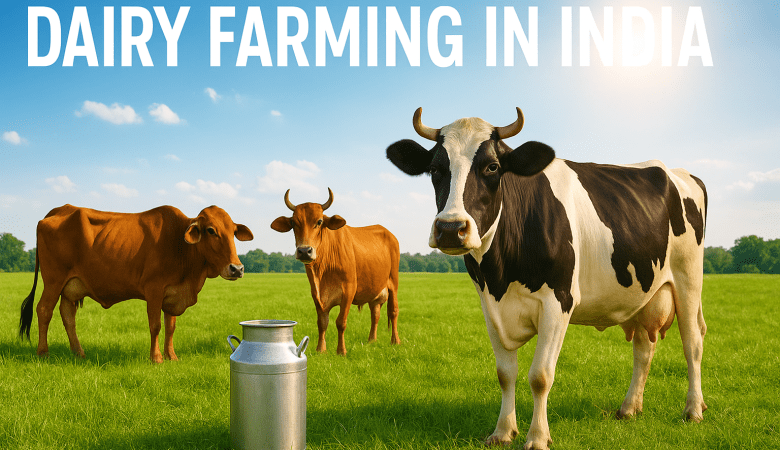
Introduction to Dairy Farming in India Dairy farming is one of the oldest and most important agricultural activities in the world. It mainly involves keeping cows, buffaloes, or other milk-producing animals to supply milk for daily use. Milk is considered a complete food because it contains protein, calcium, vitamins, and minerals that are essential for human growth and health. Beyond providing nutrition, dairy farming also plays a vital role in rural economies. For many families, it is a reliable source of income and employment. Farmers not only earn money from selling milk, but also from products like butter, cheese, yogurt, and ghee. Even the by-products, such as cow dung and urine, are useful as organic fertilizers and biogas, making dairy farming an eco-friendly practice. Today, dairy farming is growing rapidly with the help of modern methods and technology. From improved animal breeds and balanced feeding systems to hygienic milking machines and cold storage, farmers are now able to produce high-quality milk more efficiently. This combination of traditional knowledge and modern practices makes dairy farming a sustainable and valuable part of agriculture. Dairy Farming in India Importance of dairy farming Milk is considered one of the most complete foods of animal origin. It contains all the essential nutrients—proteins, fats, carbohydrates, vitamins, and minerals—in the right proportions, making it easy to digest and highly beneficial for human health. Regular consumption of milk not only improves nutrition but also enhances the digestibility of other foods. Milk production varies across the world—some countries produce more than they need, while others face shortages. In India, annual milk production in 2015–16 stood at 155.5 million tonnes, with a per capita availability of 337 grams per day. A vast network of small, medium, and large dairy farms contributes to this figure, with commercial dairy farms expanding rapidly in urban and semi-urban areas. India’s milk comes from diverse sources: buffaloes contribute about 49%, crossbred and exotic cows 27%, indigenous cows 21%, and goats about 3%. Smaller amounts are also obtained from camels, sheep, and yaks. Uttar Pradesh leads in total milk production, followed by Rajasthan, while Punjab and Haryana record the highest per capita availability—1,075 grams and 930 grams respectively in 2016–17. By contrast, Delhi recorded just 35 grams. Demand for milk continues to rise across cities, towns, and rural areas. This is driven by population growth, better education, higher nutritional awareness, and improved purchasing power. In India, around 60% of milk is consumed in liquid form, while the rest is used to prepare ghee, curd, paneer, cheese, ice cream, dairy whiteners, and traditional sweets. Many consumers still prefer raw milk, which is perceived as fresh and natural. Dairy farming plays a vital role in the rural economy. For millions of families, it provides a daily source of income with relatively low risk. Nearly 43% of Indian farmers are small cultivators and 26% are agricultural labourers, many of whom maintain one or two milch animals. For these households, especially in drought-prone areas of Rajasthan and Gujarat, dairy farming provides sustenance and financial security. However, most small farmers still follow traditional methods, which limits productivity. Without adopting scientific practices and proper management, some face losses instead of profits. By improving awareness, training, and access to modern dairy technologies, farmers can enhance milk yields, reduce risks, and secure better livelihoods. In short, dairy farming in India is not only a major source of food and nutrition but also a backbone of rural life, providing employment, income, and stability to millions of families across the country. Employment Potential in Dairying India’s share in the global milk trade is still quite low, and only a small portion of the milk produced in the country is processed. In fact, nearly 65–70% of total milk is handled by the informal sector, where local vendors collect milk directly from farmers and sell it in urban and semi-urban markets. With the rising human population, the demand for food continues to grow. At the same time, cultivable land is shrinking worldwide, making the livestock sector even more important. Dairying not only ensures nutritional security but also provides significant employment opportunities for millions of people. The Agricultural and Processed Food Products Export Development Authority (APEDA) regulates the import and export of dairy products in India. Traditional Indian milk-based sweets, such as rasgulla, are highly popular both in the country and abroad, especially among the Indian diaspora. The demand for such products is expected to grow, opening new avenues for exports. Since India has one of the lowest costs of milk production in the world, it is well-positioned to benefit from the global dairy boom. Both nationally and internationally, the dairy sector offers vast potential for employment, entrepreneurship, and economic growth. Important breeds of cattle A breed is a large group of animals developed over centuries through selective breeding by humans to improve desirable qualities. Animal breeding refers to the scientific practice of rearing domestic animals to enhance traits such as milk production, strength, or adaptability. The main methods used are selective breeding (choosing the best animals within a breed) and crossbreeding (mating animals of different breeds). Animals of the same breed share a common ancestry and have similar physical, physiological, and economic traits that pass from one generation to the next. In India, both indigenous (desi) and crossbred cattle contribute to milk production. Crossbreeds are created by combining Indian breeds (Bos indicus) with exotic breeds (Bos taurus). Exotic cattle generally have higher milk yields, but they are less suited to India’s hot and humid climate compared to indigenous breeds. India’s cattle population is very large, but only about 22–25% is classified as recognized breeds, while the rest are non-descript. A unique feature of indigenous cattle is the hump on their back. Based on utility, Indian cattle are divided into three groups: milch breeds (for milk), dual-purpose breeds (for both milk and draught), and draught breeds (for labor work). India has 41 well-recognized native cattle breeds. Some of the most famous milch breeds are Gir, Sahiwal, Red Sindhi,
What is Dairy Farm Business? Dairy farming has been one of the oldest and most profitable agricultural practices across the world. With the increasing demand for milk and milk products, the dairy farm business has transformed into a highly structured industry. From small-scale traditional farming to large commercial enterprises, dairy farming provides employment, nutrition, and economic growth opportunities globally. The dairy farm business involves breeding and raising cattle, buffaloes, goats, or other milk-yielding animals to produce milk and milk-based products. It is not just about milking cows; it is a combination of animal husbandry, feeding management, veterinary care, processing, and marketing of dairy products. Globally, dairy farming contributes significantly to the agricultural sector. Countrie like India, the USA, China, and Brazil are among the leading milk producers. The demand for dairy products such as milk, curd, butter, cheese, and yogurt continues to rise, making dairy farming a highly profitable venture. How to Start Dairy Business in India? India is one of the largest producers and consumers of milk in the world.The dairy industry in India is not only vital to the economy but also provides employment and livelihood to millions of rural families.With rising demand for milk, cheese, paneer, butter, and other dairy products, starting a dairy farming business in India can be highly profitable if executed with proper planning and management. India’s dairy industry plays a major role in boosting the nation’s agricultural economy. According to government reports, India produces over 220 million metric tons of milk annually, making it the world’s largest milk producer. Growing population, rapid urban growth, and rising preference for protein-rich foods have fueled the expansion of the dairy sector. Is Dairy Business Profitable? So, is dairy business profitable? Absolutely yes, provided it is managed with proper planning, modern techniques, and a customer-focused approach. Profitability depends on factors like animal breed, feed management, market access, and value-added production. While challenges exist, they can be overcome with strategic planning and government support. With consistent demand, multiple revenue streams, and evolving consumer preferences, the dairy business remains one of the most lucrative opportunities in the agricultural sector. Whether you’re starting small or planning large-scale operations, smart management can turn dairy farming into a highly profitable and sustainable business venture. The Pros of Owning a Dairy Farming Business Owning a dairy farm offers several benefits. Let’s break down the major advantages. Steady Demand and Market Stability Unlike seasonal crops, milk has consistent demand year-round. This ensures that dairy farmers rarely struggle with a complete market collapse. Multiple Revenue Streams Dairy farming does not rely solely on selling milk. Farmers can earn from: Butter, cheese, and yogurt production Sale of calves Cow dung (used as organic fertilizer or biogas fuel) Value-added dairy products with higher profit margins Employment and Livelihood Opportunities A dairy farm can create jobs for caretakers, veterinarians, milk processors, and distributors. For rural communities, this industry plays a vital role in reducing unemployment and improving livelihoods. Nutritional Self-Sufficiency Farmers often keep a portion of the milk for household use. This ensures nutritional security for their families with a steady supply of fresh, healthy milk.Technological Advancements Make It Easier Modern technology, including automated milking machines, feed management systems, and health monitoring apps, has made dairy farming more efficient, less labor-intensive, and more profitable. The Cons of Owning a Dairy Farming Business Despite its advantages, dairy farming is not free of challenges. Here are some of the major drawbacks. High Initial Investment Setting up a dairy farm requires substantial capital investment in: Purchasing livestock Building sheds and infrastructure Buying feed, medicines, and equipment Hiring trained staff Labor-Intensive and Time-Consuming Unlike crop farming, dairy farming is a 24/7 responsibility. Cows need feeding, cleaning, and milking multiple times a day. For many farmers, this becomes physically and emotionally demanding. Health Risks and Veterinary Challenges Animals are prone to diseases such as mastitis, foot-and-mouth disease, and other infections. Poor health management can lead to loss of productivity and high veterinary expenses. Price Fluctuations and Market Dependence While demand is stable, milk prices fluctuate depending on supply chains, processing industries, and government policies. Farmers may not always get fair prices, especially in competitive markets. Environmental and Ethical Concerns Dairy farming has been criticized for its environmental impact, including methane emissions and water usage. Ethical debates surrounding animal welfare can also affect public perception and demand. Shed Construction for Dairy Farming Business A well-planned dairy shed is the foundation of a profitable dairy farming business. It not only ensures animal comfort and higher milk yield but also reduces maintenance costs and labor. By considering climate, herd size, materials, and layout, you can build a shed that is both cost-effective and durable. As the dairy industry evolves, adopting modern technologies and sustainable construction methods will further improve efficiency and profitability. Remember, healthy cows mean healthy profits, and shed construction is the key to achieving this balance. What is the Cost of Starting a Dairy Farm in India? The cost of starting a dairy farm in India depends on multiple factors such as scale, cattle breed, infrastructure, and feed management. For a small farm with 10 cows, the investment may start from ₹12–15 lakh, while a medium farm with 20 cows requires around ₹25–30 lakh. Large-scale farms can cross ₹1 crore investment. However, with rising milk demand, government subsidies, and modern technologies, dairy farming in India has become a profitable and sustainable business opportunity. If you’re planning to start, remember: success depends on choosing high-yield cattle, maintaining proper nutrition, adopting modern practices, and managing costs effectively. With the right planning, your dairy farm can generate steady income and long-term financial stability. Total Cost of Starting a Dairy Farm in India (Example) Expense Head Land (leased) Cattle (20 high-yield cows) Shed & Infrastructure Machinery & Equipment Initial Feed Stock Veterinary & Insurance Miscellaneous Total Investment Approx. Cost (₹) 2,00,000 – 3,00,000 12,00,000 – 16,00,000 4,00,000 – 6,00,000 2,00,000 – 4,00,000 1,00,000 – 1,50,000 1,00,000 – 1,50,000 1,00,000 – 2,00,000 23,00,000 – 34,00,000 Note: Costs will
Animal Husbandry Animal husbandry is the branch of agriculture concerned with the breeding, rearing, and management of livestock such as cows, buffaloes, goats, sheep, and poultry. It plays a vital role in rural livelihoods, providing food, income, and resources for millions of families across India. By adopting modern practices, farmers can increase productivity, improve animal health, and ensure sustainable farming. At Tabelawala Farm, we aim to provide guidance and financial services for farmers who wish to expand their livestock farming with modern techniques and proper care. Key Aspects of Animal Husbandry 1. Feeding and Nutrition Proper feeding is essential for animal growth, milk production, and overall health. Balanced diets include green fodder, dry fodder, concentrates, and mineral mixtures. Nutrition management ensures high-quality products like milk. 2. Breeding and Genetics Scientific breeding techniques help improve livestock quality. Artificial insemination and selective breeding enhance desirable traits like higher milk yield, disease resistance, and faster growth rates. 3. Health and Disease Management Regular vaccination, deworming, and veterinary care are crucial for preventing diseases. Healthy animals ensure better productivity and reduce economic losses. 4. Shelter and Housing Well-ventilated, clean, and comfortable housing protects animals from extreme weather, reduces stress, and prevents infections. Proper housing also supports efficient feeding and milking practices. 5. Management and Care Daily care, timely feeding, record-keeping, and monitoring of animal behavior are vital for efficient farm management. Proper training of farmers ensures better results in animal husbandry. Benefits and Importance of Animal Husbandry 1. Food Security Animal husbandry ensures a steady supply of milk, fulfilling nutritional requirements of the population. 2. Economic Contribution Livestock farming provides income opportunities for rural households, reduces unemployment, and contributes significantly to India’s GDP. 3. Other Products Apart from food, animals provide wool, leather, dung (as manure and bio-gas fuel), and other by-products. 4. Labor and Resources Animals like bullocks and buffaloes are still used for plowing fields and transportation in rural areas, reducing dependency on machines. Examples of Animal Husbandry Cattle Farming Cattle farming is one of the most common forms of animal husbandry in India. It involves rearing cows and buffaloes for milk, meat, leather, and draft power. Scientific methods in breeding, feeding, and healthcare can significantly increase milk yield and ensure better quality. At Tabelawala Farm, we specialize in supporting farmers with financial services and expert guidance in cattle farming. Our aim is to empower farmers with the right resources to manage livestock efficiently and profitably. ❓ Frequently Asked Questions (FAQs) on Animal Husbandry 1. What is animal husbandry? Animal husbandry is the branch of agriculture that involves breeding, rearing, and caring for livestock such as cows, buffaloes for food, income, and resources. 2. Why is animal husbandry important in India? It is important because it provides milk,food security, supports rural livelihoods, and contributes significantly to the Indian economy. 3. What are the main aspects of animal husbandry? The key aspects include feeding and nutrition, breeding and genetics, health and disease management, shelter and housing, and overall care and management. 4. What are the benefits of cattle farming? Cattle farming provides milk, dung (used as fertilizer and biofuel), leather, and draft power for agriculture. It also generates steady income for farmers. 5. How does Tabelawala Farm support animal husbandry? At Tabelawala Farm, we provide expert guidance, modern livestock solutions, and financial services to farmers, helping them increase productivity and profitability in cattle farming. Animal husbandry is the branch of agriculture that involves breeding, rearing, and caring for livestock such as cows, buffaloes for food, income, and resources. It is important because it provides milk,food security, supports rural livelihoods, and contributes significantly to the Indian economy. The key aspects include feeding and nutrition, breeding and genetics, health and disease management, shelter and housing, and overall care and management. Cattle farming provides milk, dung (used as fertilizer and biofuel), leather, and draft power for agriculture. It also generates steady income for farmers. At Tabelawala Farm, we provide expert guidance, modern livestock solutions, and financial services to farmers, helping them increase productivity and profitability in cattle farming. 👉 Apply for a Cattle Loan. TabelaWala – White Gold Livestock Pvt. Ltd. — Empowering farmers, Please enable JavaScript in your browser to complete this form.Please enable JavaScript in your browser to complete this form. Name * FirstLast Mobile Number *Enter Your Number Submit
Welcome to TabelaWala, brand name of White Gold Livestock Private Limited, the ultimate marketplace for dairy farmers looking to buy or sell cows and buffaloes online as well as offline.