High-Tech Dairy Farming
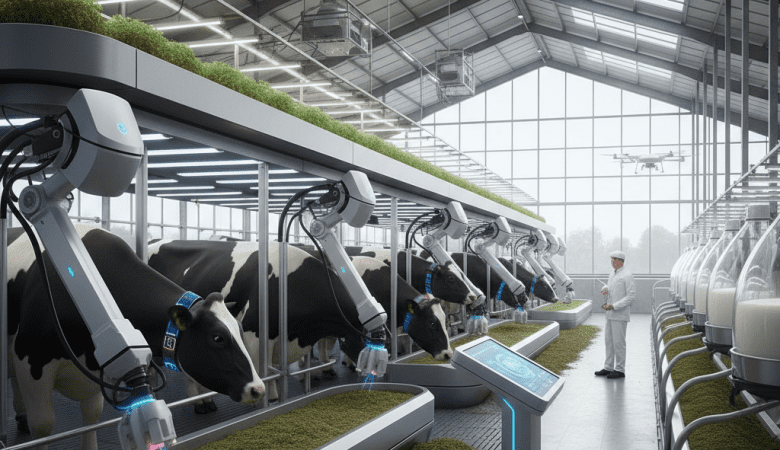
Introduction High-tech dairy farming is transforming traditional livestock practices into a modern, efficient, and highly productive industry. With advancements like automatic milking machines, smart feed mixers, animal grooming systems, and waste management technology, modern dairy farms ensure better cow comfort, hygiene, and milk yield. These innovative machines and systems not only save labor but also enhance the overall efficiency of the farm. In this blog, we’ll explore how smart dairy farming infrastructure, advanced dairy farm machines, and precise feed and water management are shaping the future of milk production while maintaining the perfect balance of technology and animal welfare. High-Tech Dairy Infrastructure High-Tech Dairy Infrastructure ensures modern sheds, automated milking, and smart management that improve cow comfort, hygiene, and milk yield. Automatic Milking Machines One of the most impressive advancements in dairy farming is the automatic milking machine. Designed for cows and buffaloes, this machine simplifies the milking process while ensuring hygiene and animal comfort. The machine carefully secures the animal in a bracket. Soft brushes vibrate to clean the teats thoroughly, preparing them for milking. Using laser technology, the suction cups automatically attach to the teats, and milk flows directly into a storage tank through pipes. Farmers can set a milk limit, and the machine stops automatically once the limit is reached. This not only reduces manual labor but also ensures consistent milk quality and quantity. Automatic Feed Mixers Feeding animals is another area where technology has made life easier. Automatic feed mixers collect feed from piles, mix it with essential minerals, and deliver it directly to the animals. Ensures proper nutrition for higher milk production. Mixes feed thoroughly before distributing it in front of the animals. Prevents feed wastage and ensures every animal gets its share. This type of machine is crucial for large farms where managing nutrition manually would be time-consuming and inefficient. Animal Grooming Machines Animal hygiene and grooming are essential for healthy livestock. Various machines cater to this need: Hair Cleaning Machines Used primarily for cows and buffaloes, these machines: Secure the animal safely. Clean the body and remove excess hair. Collected hair is processed into wool or other products. Automatic Brushing Machines These brushes provide a gentle massage for cows, improving blood circulation and relaxation. Animals voluntarily use the brush to massage themselves. Promotes healthy skin and increases milk yield. Cleaning and Waste Management Machines Large-scale dairy farms generate a significant amount of waste. Farming scrapers and hydraulic cleaners efficiently remove manure without harming the animals. This saves labor and maintains farm hygiene. One of the most impressive aspects of this farm is its sustainable waste recycling system: Cow dung separation: Machines separate solid and liquid waste. Vermicompost production: Solid dung is converted into compost, sold at ₹7/kg. Cow urine utilization: Liquid waste is used for organic farming and horticulture. Clean environment: Regular waste removal prevents odor and disease. Feed Handling and Storage Efficient feed management is key to livestock productivity. Several machines assist in this process: Bale Wrapping Machines: Preserve grass bundles by wrapping them in plastic to prevent spoilage from rain or sunlight. Feeder Machines: Open grass bales and evenly distribute feed to animals. Remote-Control Feed Pushers: Gather scattered feed and place it within the animals’ reach without disturbing them. Calf Feeding Machines (Futura Mirch Express) Designed for young calves: Dispense milk mixed with essential minerals for growth. Encourage healthy feeding habits. Reduce the risk of malnutrition or early weakness in calves. Machinery and Tools Farms in New Zealand are highly mechanized. Some of the key equipment include: Utility Bikes (Mini-tractors) – used to move around the farm quickly, pull small trolleys, or operate grass-measuring devices. Grass Measuring Device – calculates pasture height and quantity, helping farmers plan cattle feed. Feed Silos – large storage units that hold and dispense cattle feed. Calf Feeders – specialized containers with multiple nipples, allowing calves to drink milk simultaneously. Spraying Systems – contract-based, where companies handle crop spraying with precision, ensuring safety and efficiency. Water and Irrigation System Water management is crucial on a dairy farm. Here, a pivot irrigation system is installed across fields. These rotating sprinklers: Provide uniform rainfall-like irrigation. Operate on timers to distribute water evenly. Maintain soil moisture essential for grass growth. Animal Health and Care The farm has a dedicated section for animal healthcare, often referred to as the farm hospital. Here: Injured cows are treated. Hooves are cleaned. Vaccinations and injections are administered. Cows are monitored with sensors and tagging systems. If a cow shows signs of illness, it is automatically separated through drafting gates for inspection and treatment. Weather and Living Conditions One of the most fascinating aspects is that cows stay outdoors year-round—even during winters when temperatures drop as low as -8°C. With their natural resilience and proper feed, they continue grazing and producing milk without issues. What is high-tech dairy farming? High-tech dairy farming uses modern machines like automatic milking systems, feed mixers, grooming machines, and waste management tools to improve milk yield, animal comfort, and farm efficiency. How do automatic milking machines work? Automatic milking machines use sensors, lasers, and suction cups to milk cows hygienically. They clean teats, attach automatically, and stop once the milk limit is reached. What are the benefits of automatic feed mixers in dairy farms? Automatic feed mixers ensure balanced nutrition, prevent feed wastage, and save time by evenly mixing and distributing minerals and fodder to all animals. How is waste managed in modern dairy farms? Advanced dairy farms use scrapers, hydraulic cleaners, and recycling systems to separate cow dung and urine. Solid waste is turned into vermicompost, and liquid waste is used in organic farming. Do high-tech dairy farms improve milk production? Yes, modern machines like automatic milking systems, feed mixers, and grooming tools improve cow comfort, hygiene, and nutrition, which directly boosts milk yield and quality. What role does technology play in animal healthcare on dairy farms? Smart farms use sensors and tagging systems to monitor cows’ health. If an animal shows signs of illness, drafting gates